Twisterland Game Design
Creating a first-person, responsive journaling game to nurture self-reflection and personal narrative building in young people ages 10–18
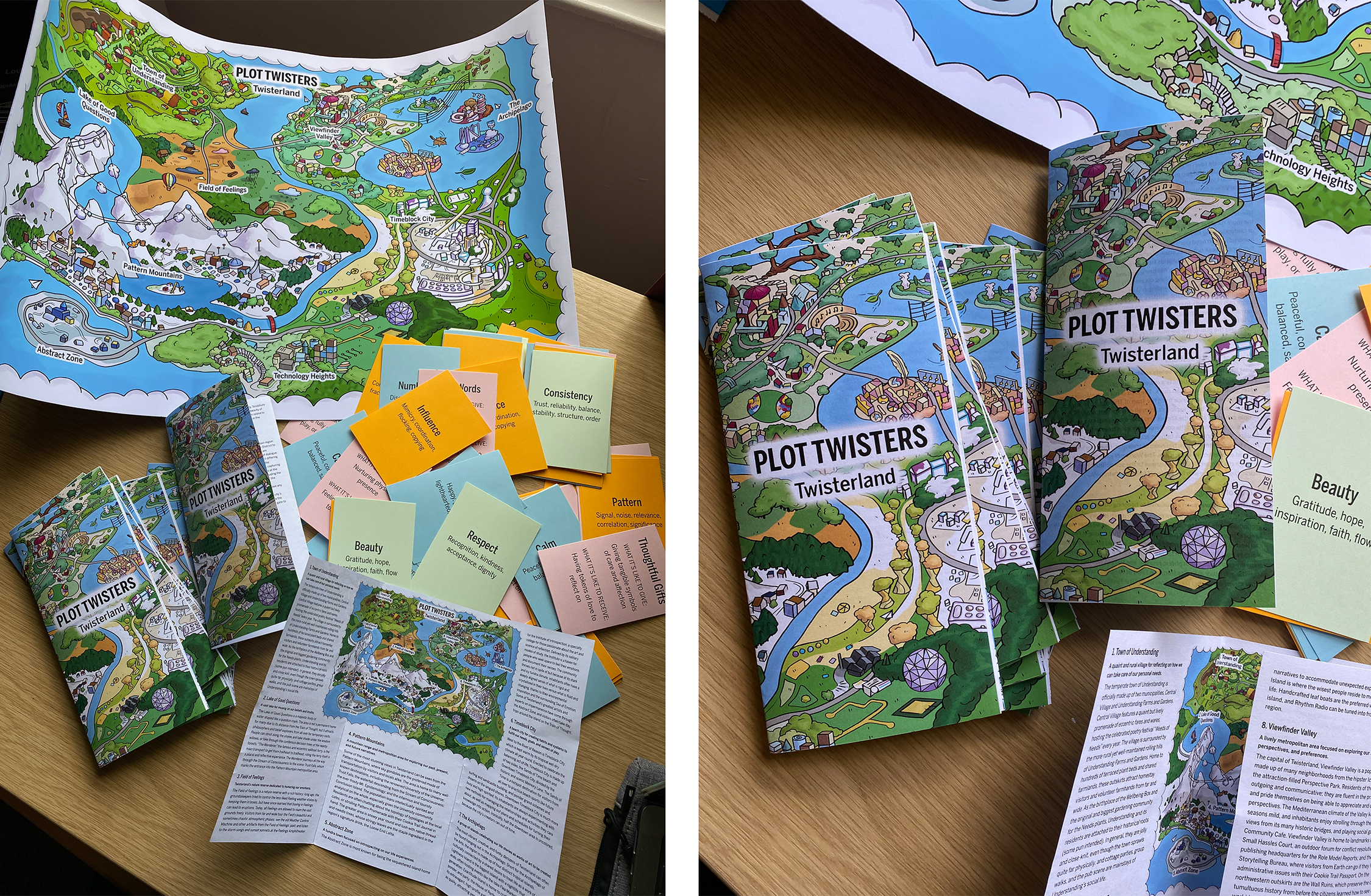
For the last four years, Plot Twisters has been focused on creating Twisterland, our flagship product. An immersive online game to support reflecting on our life stories, Twisterland aims to integrate R&D in psychology, mental health, game mechanics, and algorithm design into an artful and fun digital experience through self-exploration.
Team
- Jenny Liu Zhang, founder
- Cat Chang, designer
- Avery Lim, artist/researcher
- Melissa Regalado, artist/researcher
- Hadasa Bogatean, designer
- Jesse Parent, researcher
- Young-Kyung Kim, researcher
- Aditya Aggarwal, engineer
Activities
- Business development
- User research
- Narrative design
- User flows
- Prototyping
- Content design
- Concept art
- Design fiction
- Illustration
Stakeholders
- Plot Twisters team
Timeline
- Since 2020
Creative Process
Forming Core Team
I built a team of like-minded individuals interested in exploring design fiction and prototyping to nurture self-reflection skills in youth. Plot Twisters operated as a part-time volunteer organization, with contributors joining and departing organically, until we came upon our core team of eight.
Creating Research Foundation
I established the “Plot Twisters Think Tank,” a public Notion research database where we logged readings on topics like psychology, game design, social theory, and collective action. Our bi-monthly reading sessions ranged from discussions on non-western and decolonial framings of emotion to the importance of role models.
Testing Design Hypotheses Through Collaborations
To prototype insights, I initiated partnerships with psychology labs (e.g. The EMPOWER Lab) and civic organizations (e.g. The Honest Majority). Through mutually beneficial projects, we explored frameworks for self-reflection and game mechanics to validate or evolve our thinking.
Engaging Academic and Expert Feedback
Participating in residencies (e.g. DISI), fellowships (e.g. MEDLab), and presentations at Oxford University and Cambridge University allowed us to get feedback on prototypes and fill research gaps.
Securing Funding and Formalizing Org Charter
Winning the $50K IDEO grant in 2022 inspired us to formally establish internal governance, codifying our values, writing policies for money management, and forging circles-based operating teams.
Ongoing Game Design and Algorithm Development
Currently, we are synthesizing our research into the game's core mechanics, focusing on designing Twisterland's interactive game loop and sentiment analysis algorithm. We meet bimonthly to work on prototypes, aiming to finalize the game structure in 2025.
Key Quality
An Invite into an Imagination
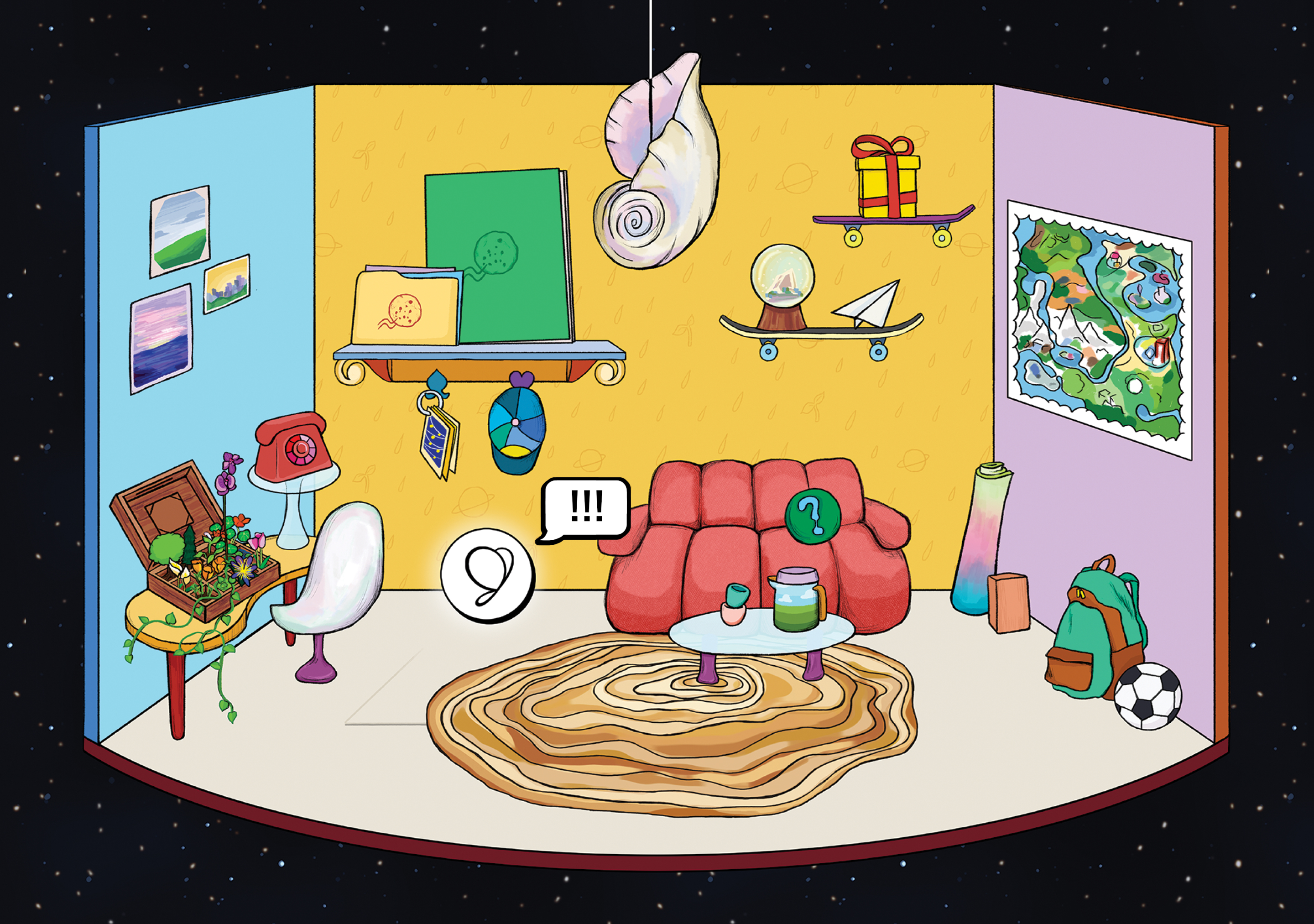
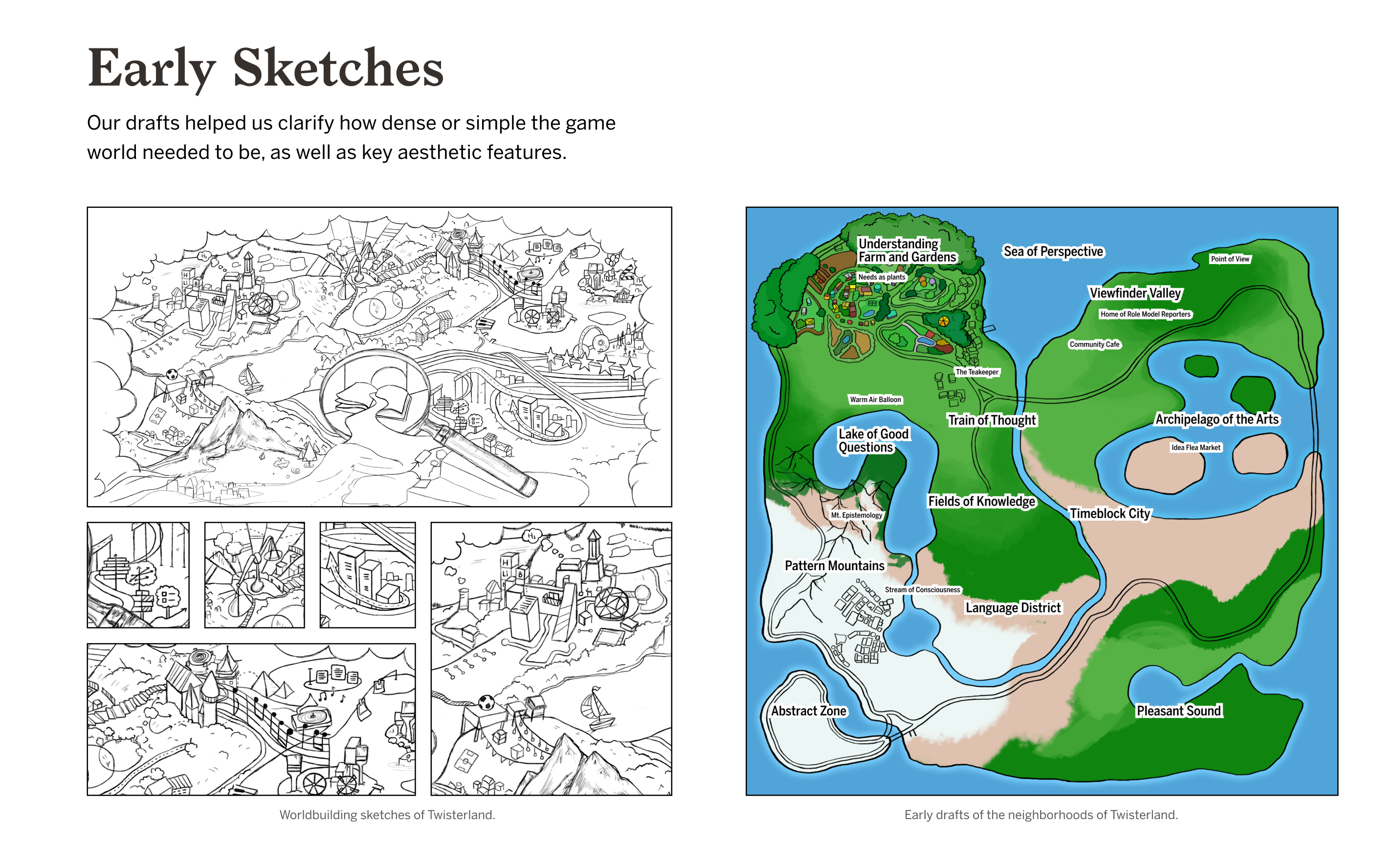
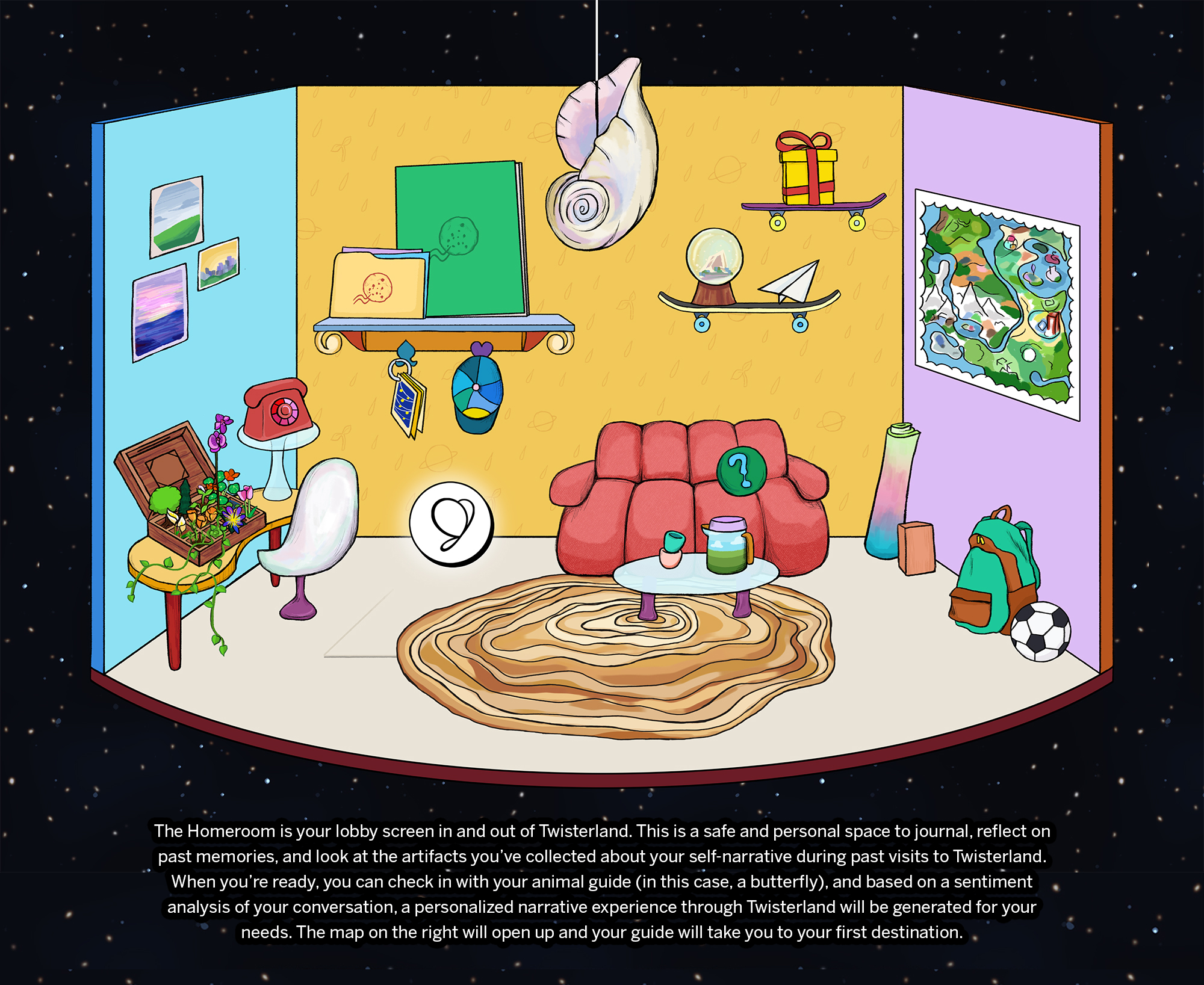
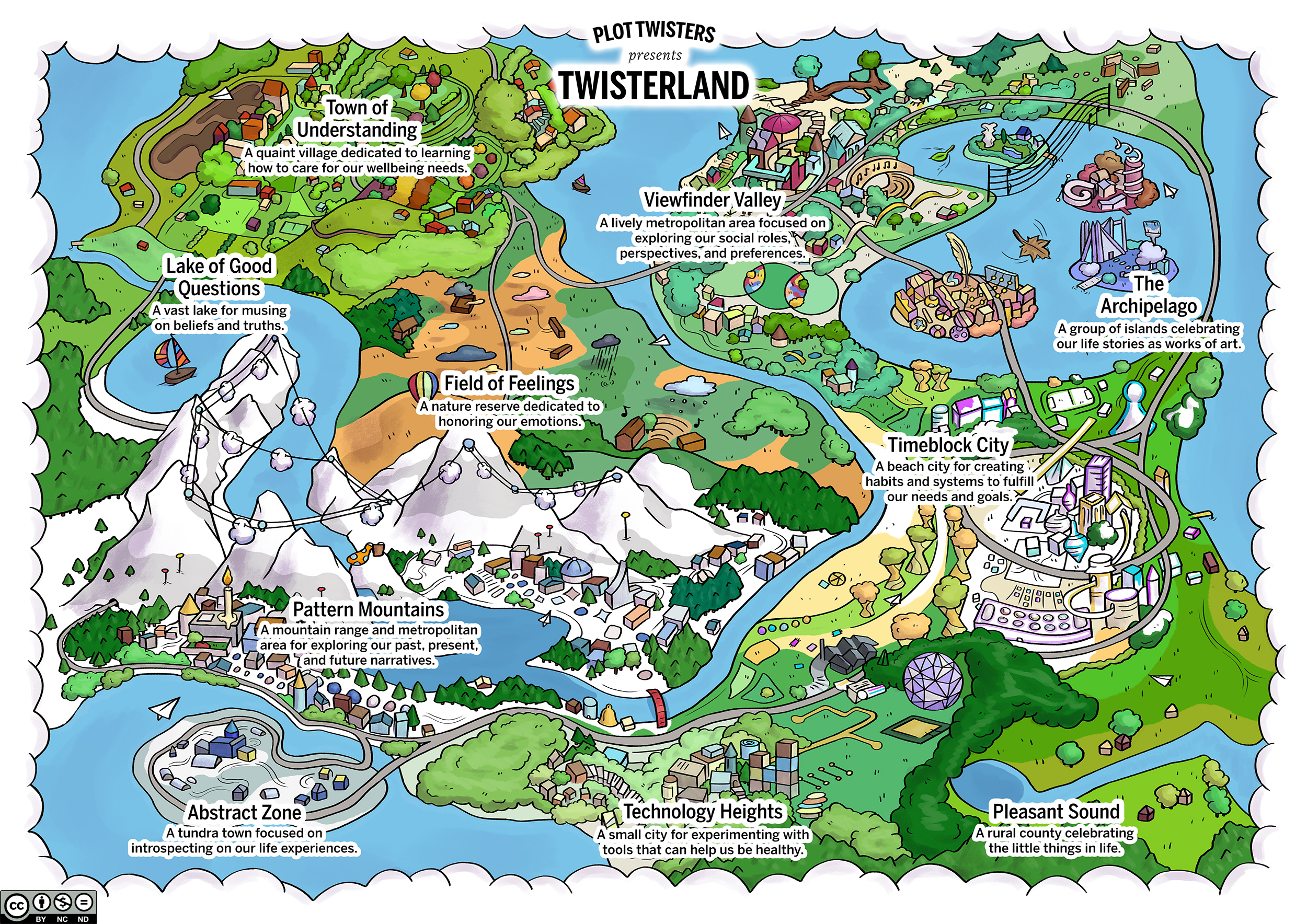
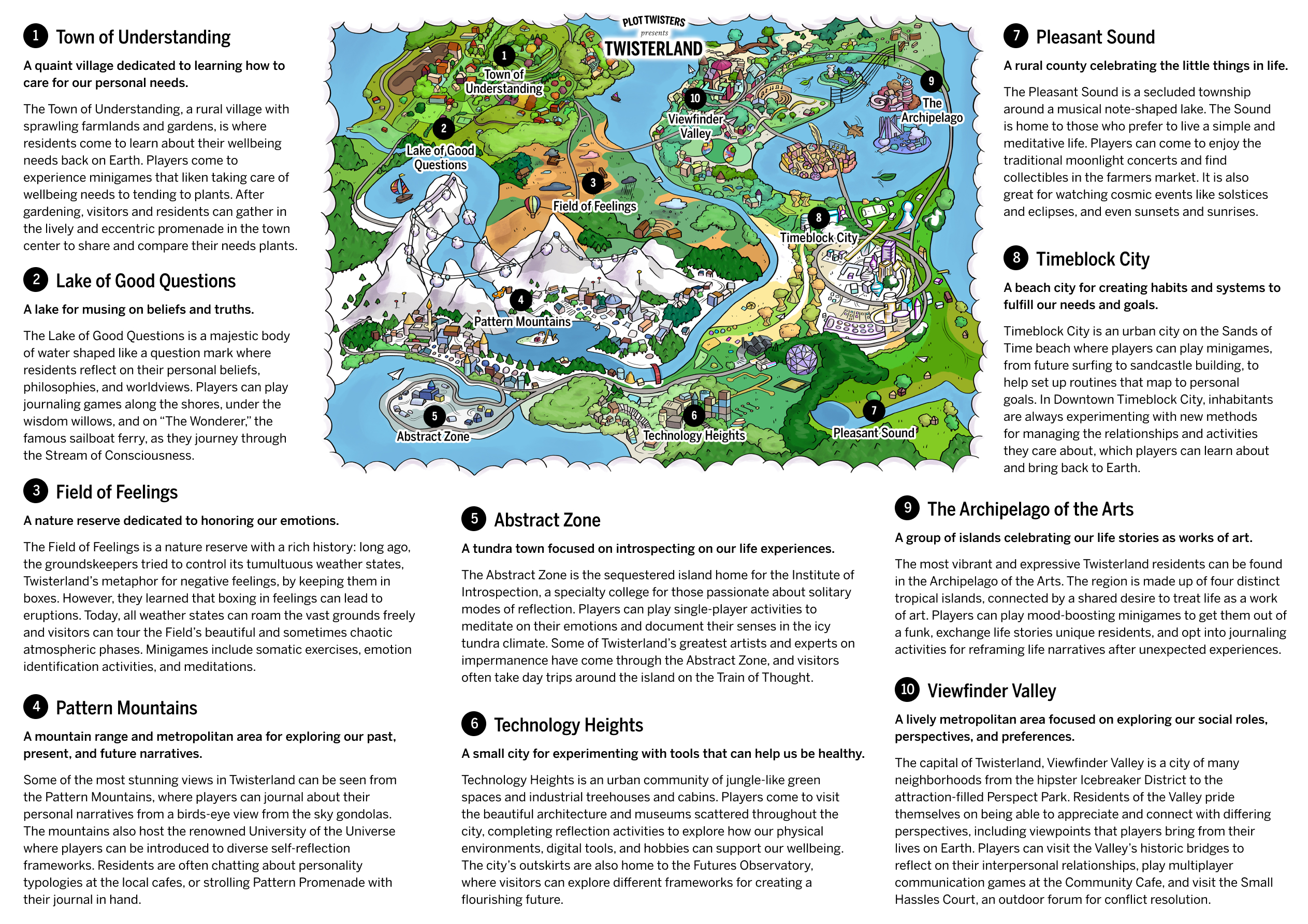
The game is a first-person experience set in Twisterland, a world where the emotional states and thought patterns of its residents affect its natural landscape, including the weather and the plant life. To live harmoniously with their landscape, residents prioritize personal and community care. Plot Twisters immerses you, a visitor to Twisterland, into the world's 10 neighborhoods, guided by non-player animal characters with their own quirky backstories and self-narratives.
Arriving to Twisterland is arriving to a new world, intentionally designed to enable contrast with Earth. The speculative world offers alternative and imaginative thinking through the use of fiction, inspiring questions about “what could be instead” in our personal stories and collective structures.
Key Quality
Refractive vs. Prescriptive Algorithm Design
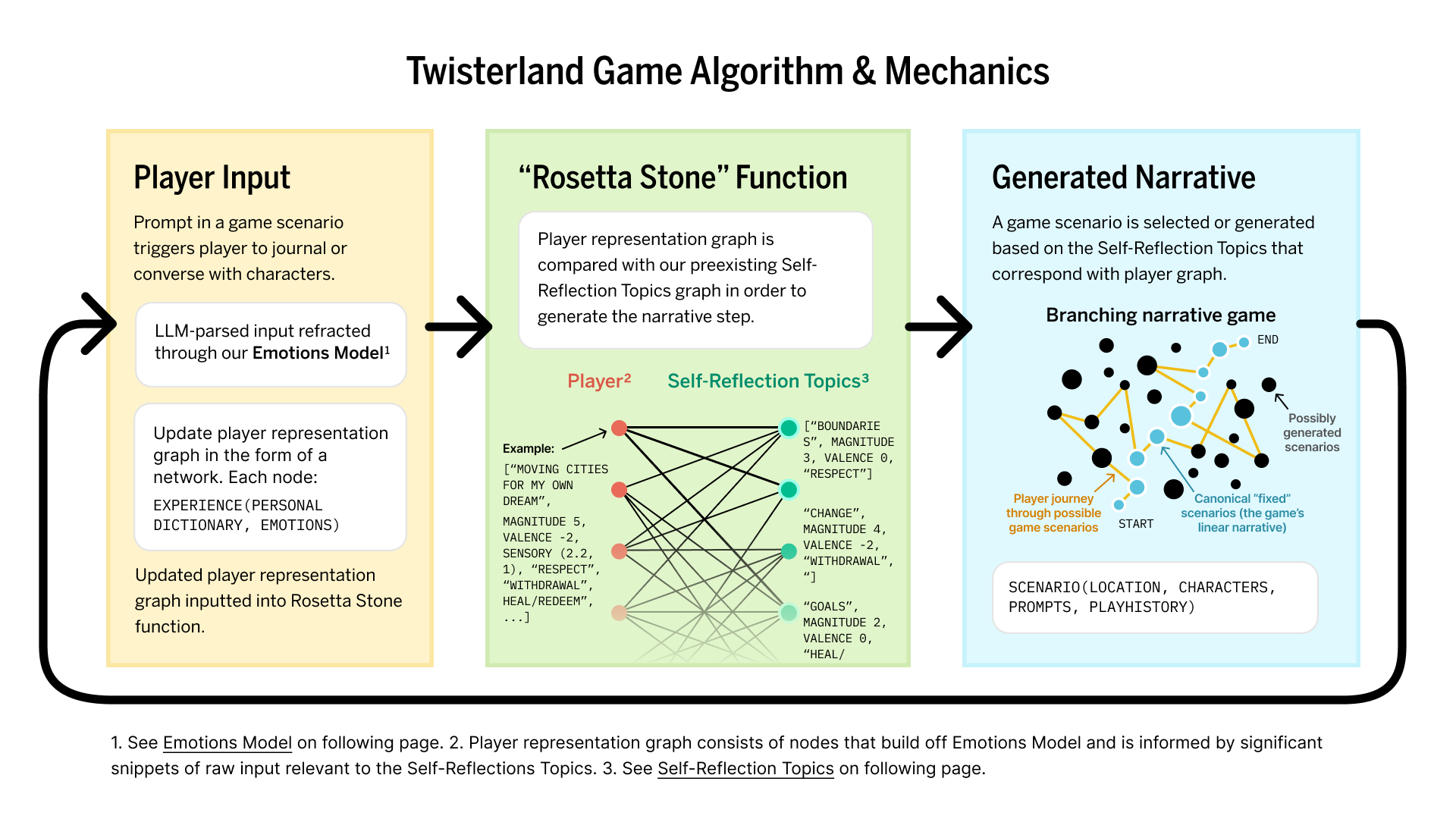
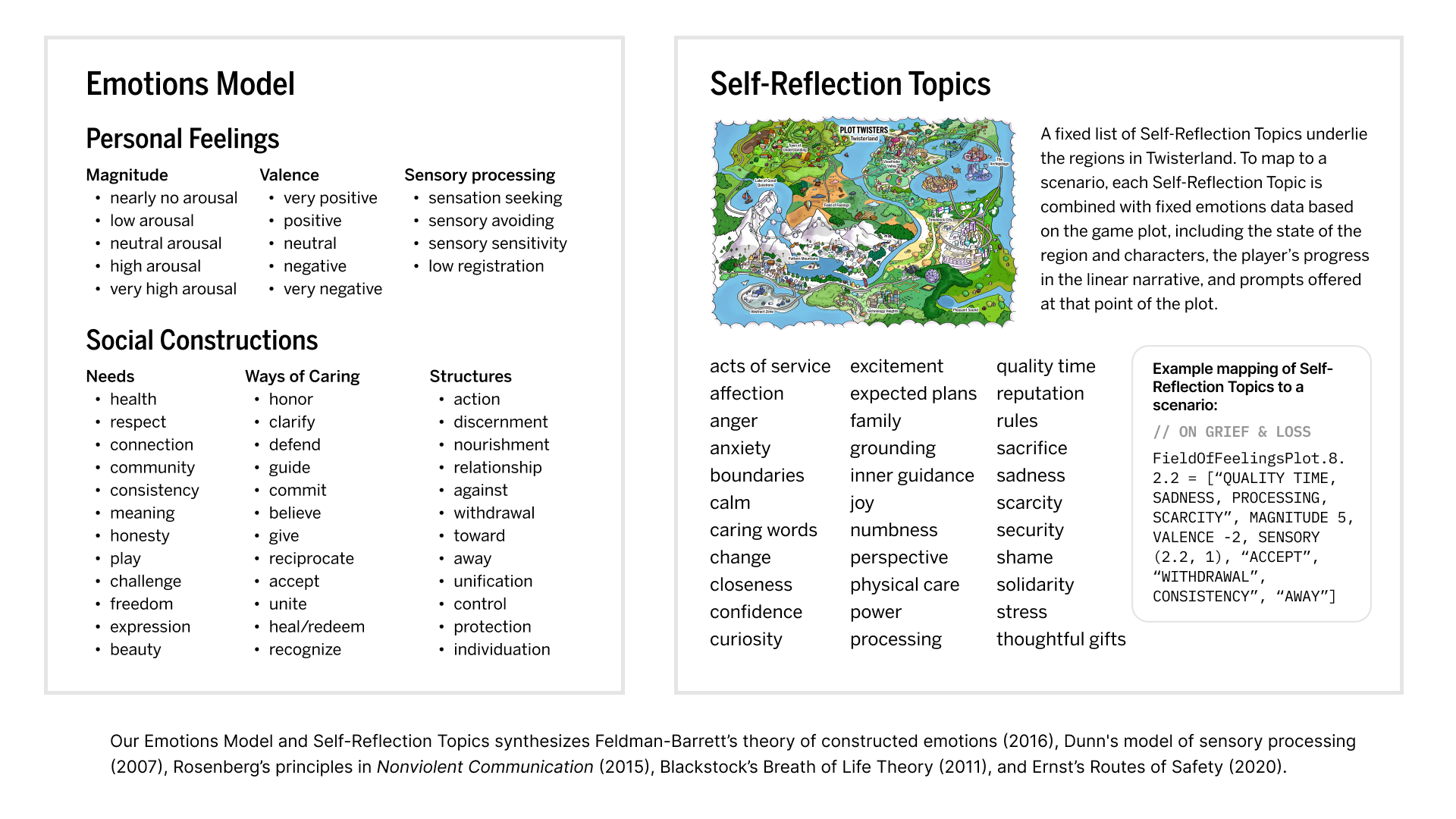
While both therapy and Twisterland aim to help individuals explore meaning, the former does so through prescriptive, loaded diagnoses. By contrast, we intend Twisterland to simply refract players' inputs through subtle changes in character storylines and environmental updates. These narrative changes are open to players' own interpretation rather than projecting labels or decisions onto the player.
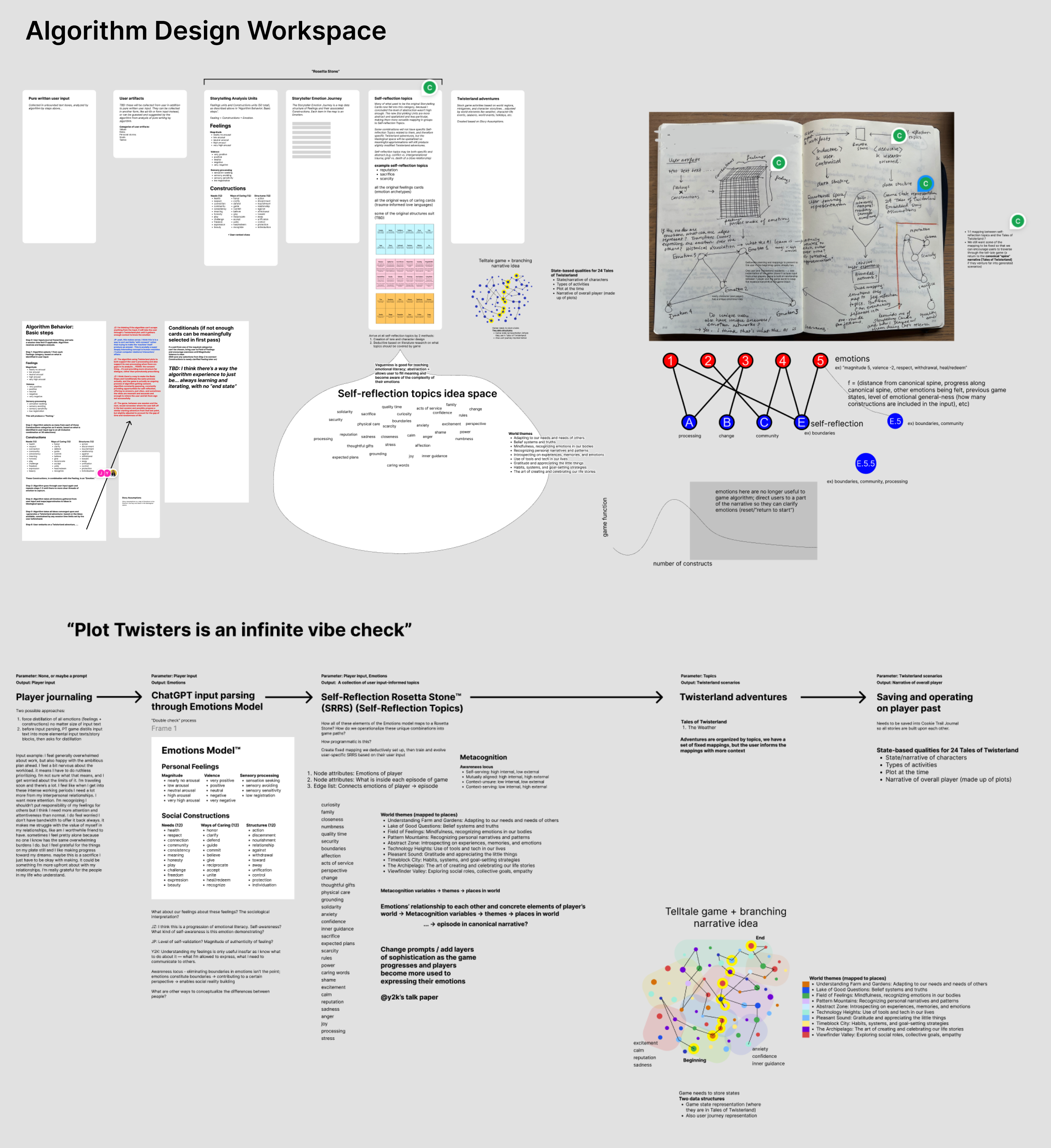
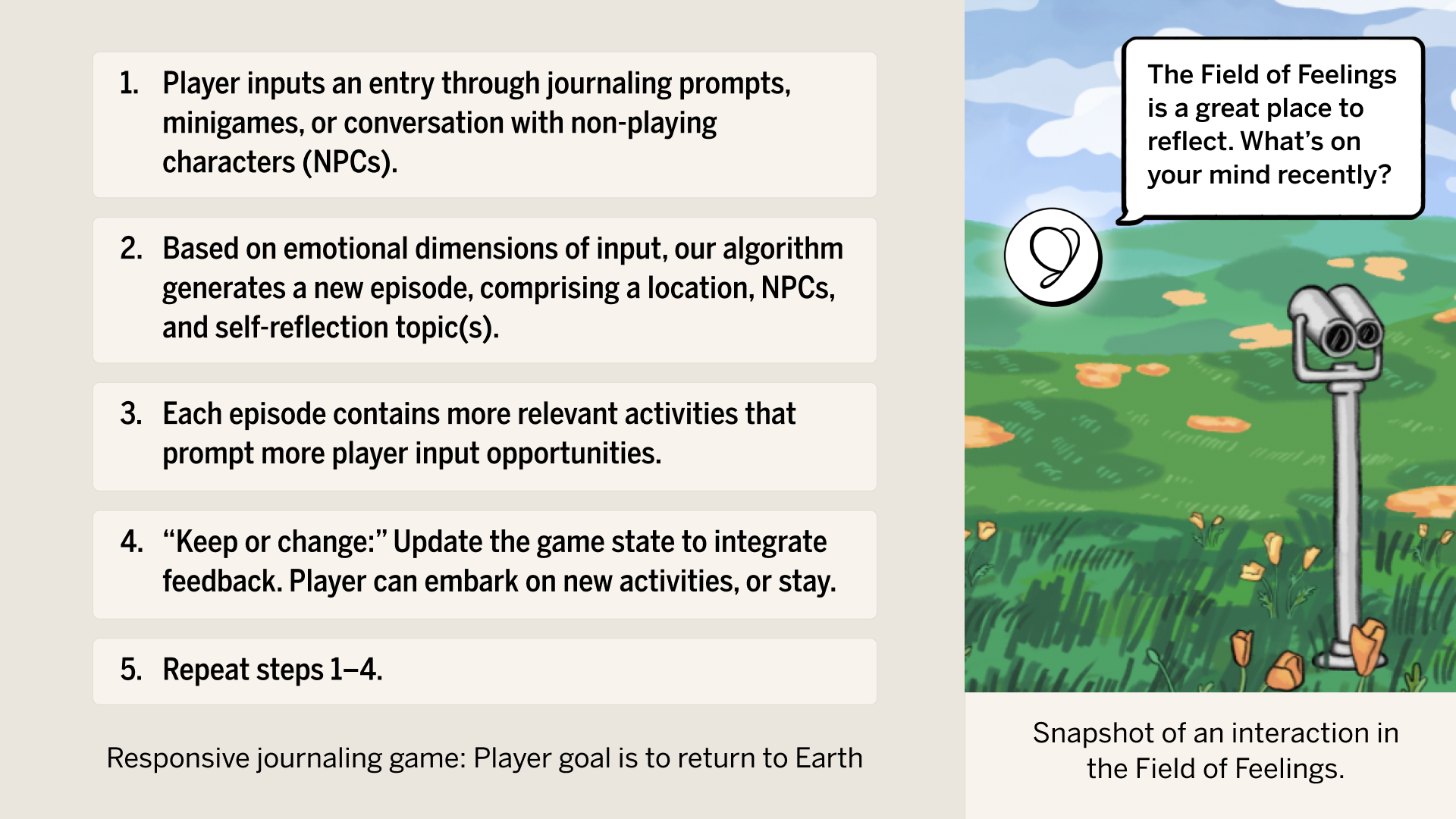
Our in-progress adaptive algorithm will update the game state and available journaling exercises based on player choices and session history. This creates a feedback loop that reinforces personal agency and ensures that each player's experience feels unique, transforming emotional learning into an interactive, self-directed journey.
Key Quality
Infinitely Revisitable and Repeatable
Emotions are complex and layered, and a linear, time-restricted, step-by-step program may not always be effective in understanding or resolving them. Twisterland enables players to work through their experiences at their own pace, in their own direction through revisitable game scenarios and repeatable self-reflection exercises, making Twisterland a flexible tool for building self-knowledge and emotional literacy skills.
Project Takeaways
Design Fiction Can Foster Emotional Connection
Twisterland's speculative, responsive world shows the impact of using design fiction to deepen emotional engagement with the potentially deep and sensitive topics at hand. Through visual and narrative metaphor, we can represent challenging, abstract concepts in rich and emotionally compelling ways that are open to interpretation.
Balancing Creative Intuition With External Feedback
As creators with firsthand experience of the self-reflection problem in youth, we have strong instincts about Twisterland's direction. This cyclical process involves receiving feedback, refining our stance in response to it, and creating prototypes to gain further input. Being keyed into this push-and-pull allows us to remain grounded while pushing Twisterland's design in mutually meaningful directions.
Tension Between Fixed Structure and Player Agency
By embedding our own values in the game design, we shape the pathways and outcomes players encounter. This may constrain self-exploration. However, this is also the nature of design: to guide users through a premeditated experience rooted in an intentional vision. The challenge moving forward is to refine this balance between a guiding structure and empowering open-ended journeys.